
A digital asset management system for organizations to provide durable access to institutional repositories and resources.
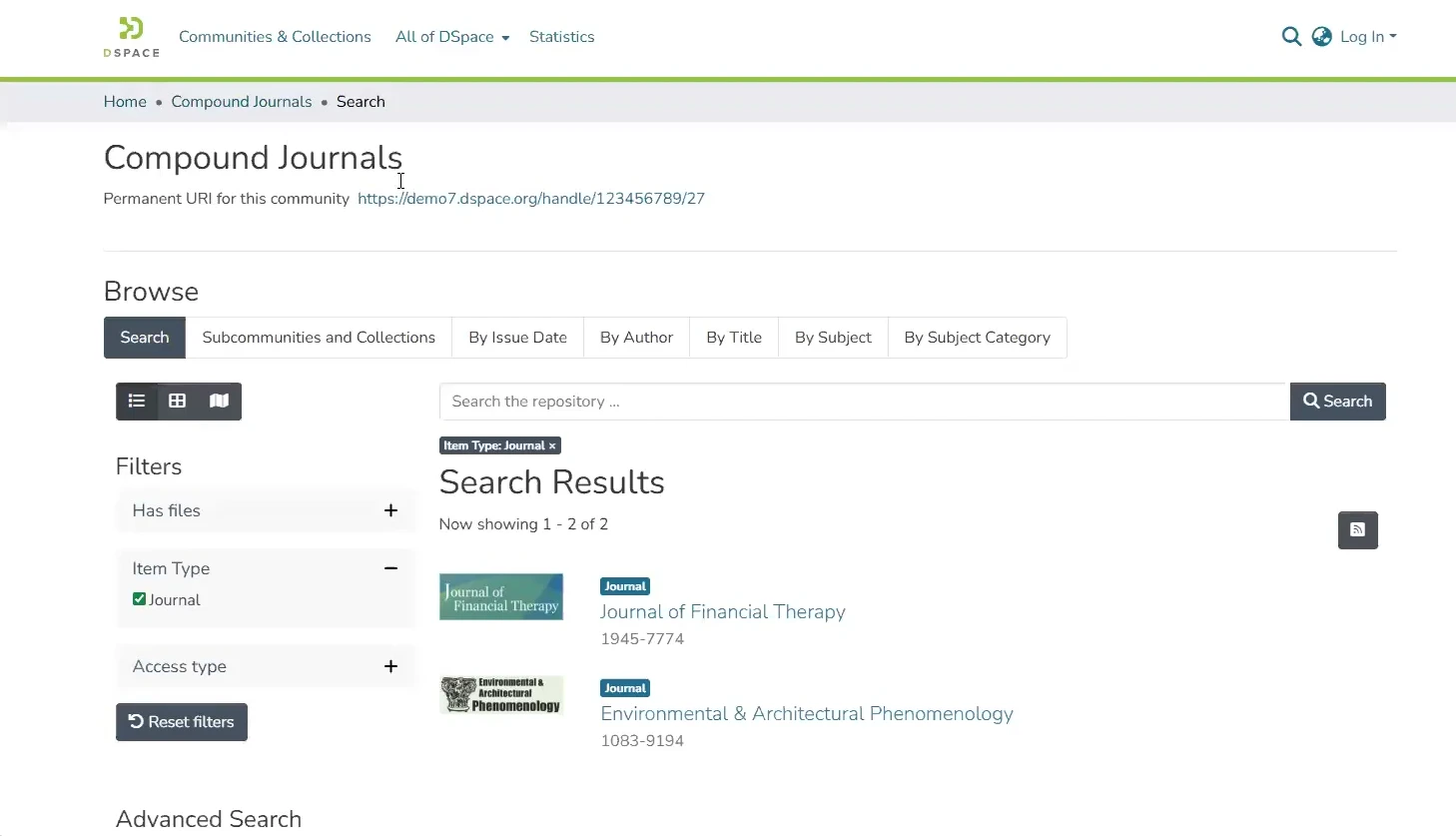
DSpace is an open-source repository application used by organizations to provide durable access to digital resources. It functions as a digital asset management system specifically designed for institutional repositories and digital libraries. The software allows organizations to store, manage, and preserve digital assets in a way that ensures long-term availability for researchers and the public.
The software is deployed as a server-side application and is structured into two primary components. It consists of a Java-based backend and an Angular-based frontend that interacts with the backend via a REST API. To function, the system requires a PostgreSQL database for data storage and a servlet container, typically Apache Tomcat, to host the web application. Users interact with the system through a web browser, while administrators manage the server installation and configuration.
Key features
- REST API for backend communication
- Angular-based user interface
- Support for OAI-PMH interfaces
- Support for SWORD interfaces
- PostgreSQL database integration
- Java-based server architecture
- Docker Compose scripts for development and testing
The architecture separates the data management layer from the presentation layer to ensure scalability and flexibility. The backend handles the core logic, indexing, and storage, while providing machine-based interfaces for interoperability with other digital library systems. The frontend serves as the primary user interface, consuming the REST API to display and manage resources. This decoupled structure allows developers to customize the user experience without altering the underlying data management logic. The software is intended for academic institutions, libraries, and government agencies that require a standardized method for archiving and sharing digital assets.
DSpace serves as a specialized tool for long-term digital preservation and open-access resource management within institutional environments.
Similar Open Source Software

Stirling PDF
A self-hosted PDF manipulation platform for editing, converting, and automating documents without external service dependencies.

Paperless-home
A document management system that converts physical documents into a searchable digital archive using optical character recognition.


Join our newsletter to get shiny new open source software delivered to your inbox. Unsubscribe anytime.