
Store and search vector embeddings with integrated payload filtering for semantic search and recommendation systems.
Qdrant is an open-source vector similarity search engine and vector database. It allows users to store, search, and manage points, which consist of vectors paired with additional JSON payloads. This makes it suitable for a wide range of AI and machine learning use cases, including semantic search, recommendation systems, and image retrieval.
The software is typically deployed as a server via Docker or as a managed cloud service. It also offers Qdrant Edge, a lightweight version that runs inside the application process for resource-constrained environments or offline functionality. Users interact with the system through a REST API with an OpenAPI 3.0 specification, a gRPC interface for production-tier speed, or official client libraries for various programming languages.
Key features
- Support for dense, sparse, and multi-vector search
- Payload filtering using keyword matching, numeric ranges, and geo-locations
- Hybrid search combining semantic and keyword precision via fusion strategies
- Vector quantization to reduce RAM usage by up to 97%
- Horizontal scaling through sharding and replication
- Multitenancy for scalable data partitioning in multi-user environments
- GPU support for accelerated indexing on NVIDIA and AMD hardware
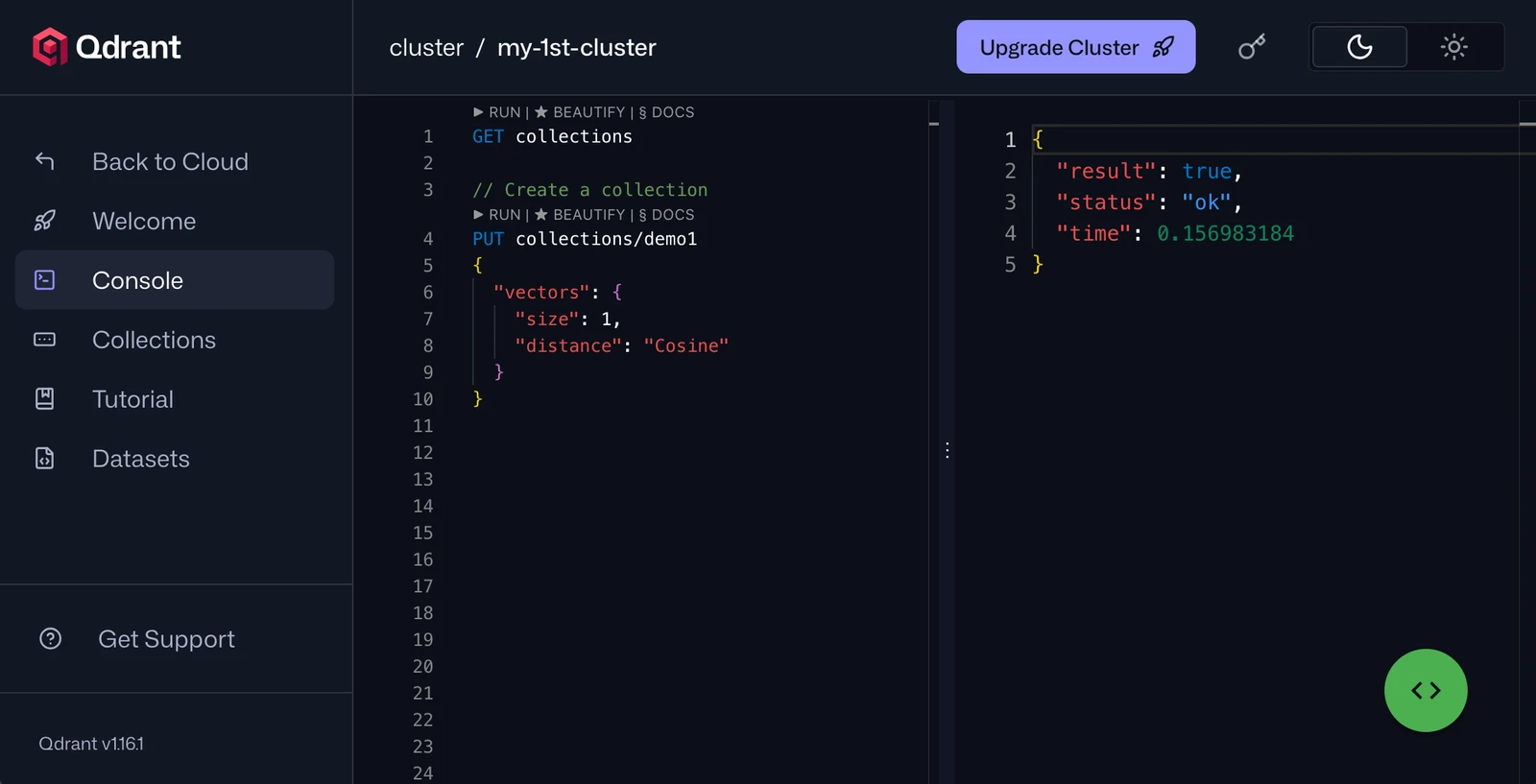
- Integrated Web UI for data exploration and deployment monitoring
Written in Rust, the engine utilizes SIMD hardware acceleration and async I/O via io_uring to maintain performance and maximize disk throughput under high load. It integrates with various embedding providers and AI application frameworks, providing tools for search relevance tuning such as Maximal Marginal Relevance and Relevance Feedback Queries. The architecture includes write-ahead logging to ensure data persistence and update confirmation even during power outages. It is designed to handle extreme classification tasks, such as e-commerce product categorization with millions of labels.
Qdrant is a production-ready infrastructure component for developers building neural-network or semantic-based matching applications.



Join our newsletter to get shiny new open source software delivered to your inbox. Unsubscribe anytime.