
Build 2D, 3D, and multiplayer games for mobile, desktop, and web using a no-code event system.
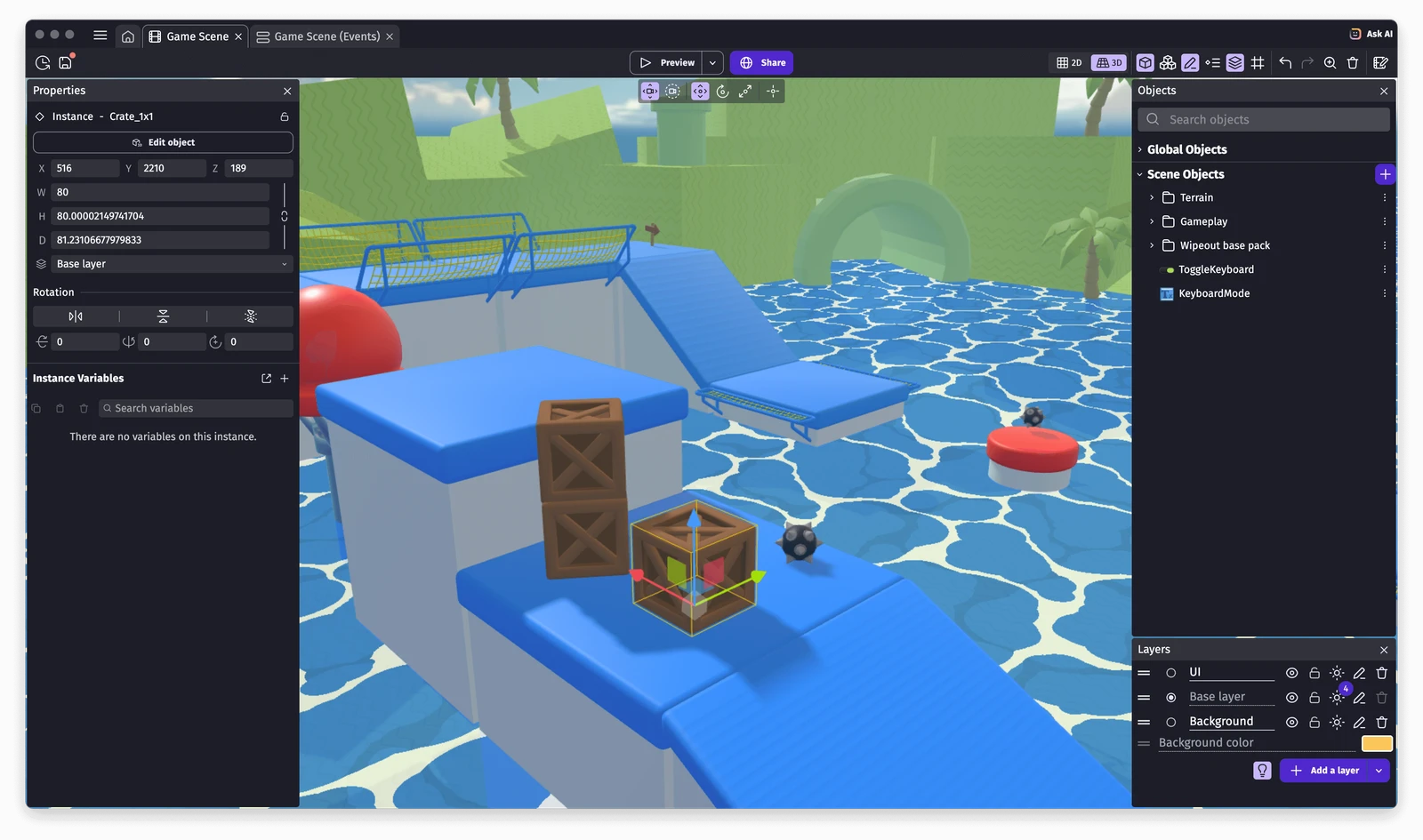
GDevelop is an open-source web app and server that enables the creation of 2D, 3D, and multiplayer games. It is designed as a no-code platform, allowing users to build games without writing traditional code. The software is available as a desktop application and a web app, making it accessible across different operating systems and browser environments.
Users employ an event-based system and modular behaviors to define game logic and object interactions. The platform supports exporting projects to multiple destinations, including iOS, Android, Steam, and various web platforms. It also includes an AI tutor to assist in the development process, helping creators build their projects or learn the system through guided assistance.
Key features
- Visual event-based system for no-code logic
- Support for 2D and 3D game development
- Multiplayer game creation capabilities
- One-click publishing to Steam, iOS, Android, and web
- AI assistance for building and tutoring
- Modular behaviors for rapid prototyping
- Integrated asset store for templates and asset packs
- Support for custom extensions via no-code or code
The technical architecture consists of a React and Electron based editor and a game engine written in TypeScript. It utilizes PixiJS and Three.js for WebGL rendering in 2D and 3D environments. The engine incorporates WebAssembly for performance-critical components, such as the Box2D and Jolt Physics engines. This structure allows developers to create extensions that add new objects or behaviors to the engine. The project is distributed under the MIT license, which allows creators to distribute or sell the games they build without being forced to make their own game source code open-source.
Beyond the core editor, GDevelop maintains an ecosystem of online services and a dedicated gaming platform called gd.games for hosting and showcasing projects. It is intended for a wide range of users, from beginners who have no programming experience to experienced developers who want to speed up their prototyping process through visual tools.
GDevelop is positioned as an accessible entry point for game creators who prefer visual programming over manual coding.
Similar Open Source Software

Arnis
Convert real world geographic data into detailed Minecraft Java and Bedrock Edition worlds using OpenStreetMap.

OpenSpeedy
Modify the execution speed of Windows games by hooking system time functions via a desktop interface.


Join our newsletter to get shiny new open source software delivered to your inbox. Unsubscribe anytime.